
🇰🇷 Teach abroad · South Korea
Teach English in South Korea
The most rewarding TEFL package in Asia — free housing, paid flights and an end-of-contract bonus — plus up to €1,500/month in euros teaching online for our own academies. Save more than you thought possible.
💰 ~$2,000/mo + €1,500 online
Plus free housing & flights
🏠 Free apartment
Provided by your school
📍 Seoul · Busan · Daegu
Where you'll teach
🎓 120-hour TEFL
Included & live
4.9★ Trustpilot & Google · 2,000+ teachers trained · 15+ years
 🇰🇷 Housing + flights + bonus included
Why South Korea
★ The savings angle
🚄
📋
🚀
Why teach English in South Korea?
If you want to teach abroad and actually save, Korea is in a league of its own — schools pay for your apartment and your flights. Here's why teachers choose it.
Korea pays you to live there
Free apartment, paid flights, a one-month severance bonus and pension all come standard. Add up to €1,500/month in euros teaching online for our academies, and the savings are unreal.
Modern, safe, hyper-connected
World-class transport, lightning internet, mountains and beaches, and one of the safest countries on earth.
Structured, reliable jobs
Public schools (EPIK) and hagwons offer real contracts, steady hours and clear benefits — no guesswork.
A premium launchpad
A year in Korea is gold on a teaching CV. Your live 120-hour TEFL opens doors across Asia, Europe — and a route home to Spain.
🍲 Korean BBQ & kimchi
🎤 K-pop & noraebang
⛩️ Palaces & temples
🏔️ Hiking & ski resorts
🌸 Cherry blossoms
🚄 KTX bullet trains
What you need to teach English in South Korea
Korea offers the best perks in Asia — and asks the most in return. Here's the honest checklist, with no surprises later.
A bachelor's degree
Required for the E-2 teaching visa — in any subject. This is non-negotiable in Korea.
Native-speaker passport
The E-2 visa is open to citizens of 7 countries: US, UK, Canada, Ireland, Australia, NZ & South Africa.
Clean background check
An apostilled criminal record check. We walk you through every document step by step.
120-hour TEFL
Increasingly required and always rewarded — better pay and your pick of schools. Included.

What if I don't have a degree or native passport?
Honest answer: Korea's E-2 visa is the strictest in Asia — it requires a bachelor's degree and a passport from one of seven native-English countries. If that's not you, on-site work in Korea isn't possible — but our paid online teaching in euros still is, and we'll point you to easier-entry countries like Cambodia or Vietnam for classroom work.
Do I need a TEFL certificate?
A 120-hour TEFL is increasingly required in Korea and always pays off — a better salary, your pick of public schools and hagwons, and a real edge on every application. Yours is live, observed and included in the program.
Explore the TEFL course →
The job market
English teaching jobs in South Korea
Korea hires English teachers year-round — and most jobs come with free housing baked in. Pick your route, then stack our online roles on top to earn euros too.
🏫$1,500–$2,100/mo
Public schools (EPIK)
The government program — stable hours, great benefits, free housing and a paid flight.
🏬$1,600–$2,000/mo
Hagwons (private academies)
The biggest source of jobs — afternoon/evening hours, year-round hiring, housing included.
🎓$2,000–$3,200+
International schools
The best pay and benefits in the country — experience and a license are preferred.
👶$1,700–$2,100/mo
Kindergartens
Daytime hours and energetic young learners — fun, popular and in steady demand.
🏢Varies
University & business
Fewer hours and serious prestige — the dream roles you can grow into over time.
★ The income engineUp to €1,500/mo
Online with our academies — paid in euros
Teach online for TEFL Madrid & Exam Madrid and earn euros on top of your Korean salary. With housing already covered, this is the part that turns a great year into serious savings.
Where you'll live
Your home base in South Korea
From the neon energy of Seoul to the beaches of Busan and the volcanic calm of Jeju, we help you land in the right city for your job, your budget and your lifestyle.
- We help you choose the right city for your school and salary
- Most jobs include a free, furnished apartment
- Safe, central neighbourhoods with world-class transport
- Most teachers start in Seoul, Busan or Daegu

Seoul
The mega-capitalThe most jobs, K-everything, endless nightlife and palaces beside skyscrapers. The classic first base.
Busan
Beach cityBeaches, seafood and a relaxed coastal vibe — Korea's laid-back second city.
Incheon
Gateway & modernThe airport city and futuristic Songdo district — sleek, new and minutes from Seoul.
Daegu
Friendly & affordableBig-city life at lower cost, with one of the warmest teacher communities in the country.
Daejeon
Science & centralA central, well-connected science hub — easy travel to anywhere in Korea on weekends.
Jeju
Island paradiseA volcanic island of beaches and craters — a slower, bucket-list place to teach and live.
Salary & cost of living in South Korea
Korea is the savings capital of TEFL — because your school pays your rent. Here's the honest picture, and how our teachers turn it into real money in the bank.
Monthly cost of living
Rent · studio (if not provided)$400–$700
Utilities & phone$80–$130
Groceries$250–$400
Eating out / café$150–$300
Transport (metro / bus)$50–$80
Weekend trips$100–$250
Comfortable total (housing provided)~$800–$1,200 (~€740–€1,100)
Most teaching jobs include a free apartment, so your biggest cost disappears — that's why Korea is a savings machine. Seoul is highest; other cities cost noticeably less.

Local salary + perks
~$1,600–$2,100/mo + free housing, paid flight & bonus. Most of it is savings.
Remote with our academies
up to €1,500/mo · in euros. A second, strong-currency income on top.
Save $1,000–$1,500+/mo
With housing covered, Korea + our euros is one of the best savings setups in TEFL.
Best perks in Asia. We add the part that's missing.
Korea already pays your rent, your flight and a bonus — most programs stop there and call it a day. We go further: as a TEFL Madrid graduate you also teach online for our own academies in euros, so on top of free housing you build a second, strong-currency income. The result is savings most teachers only dream about.
Your program, step by step
Korea's visa takes more paperwork than most — so we start early and handle it with you. Here's exactly what your journey looks like.
-
1
Before you fly
4–8 weeks outWe start your E-2 paperwork early: degree apostille, background check, contracts and full WhatsApp support so nothing gets stuck.
-
2
Arrival week
Week 1Airport pickup, move into your apartment, a local SIM, your alien registration card and a city orientation. Week one and Korea already feels like home.
-
3
TEFL training
Weeks 1–4Live, observed 120-hour training: methodology, lesson planning and classroom management — with hands-on practice before you lead your own class.
-
4
Paid placement & support
OngoingWe place you with a vetted public school or hagwon, support your E-2 visa, and stay by your side — plus your remote teaching option in euros with our academies.
 🇰🇷 Live training · observed teaching practice
What's included in your South Korea program
Everything you need to land, get your visa, settle into a free apartment and start earning — handled by people who've done it before.

🎓
120-hour TEFL certification
Live, observed and internationally recognised. Yours for life and valid worldwide.

🛂
Job placement support
We connect you with vetted public schools (EPIK) and hagwons that include a free apartment.

📄
E-2 visa & document support
Apostille, background check and the full E-2 process, guided step by step so nothing is missed.

✈️
Airport pickup & apartment setup
Met when you land and settled into your school-provided apartment, with a SIM and orientation.

🤝
Real in-country support
A local team for contracts, your alien registration card, banking and any emergency.
★ Our academies🌐
Online teaching, paid in euros
Teach online for TEFL Madrid + Exam Madrid and earn up to €1,500/month — the part that turns free housing into real savings.

Career pathway
Where South Korea can take you
A year in Korea is one of the most respected lines on a teaching CV — and the perfect springboard to a global career, with a clear road to Spain at the end of it.
- 🎓
Get TEFL-certified
Start with your live, observed 120-hour TEFL.
- 💼
Teach & save in Korea
A top salary with free housing — plus remote income in euros from our academies.
- 🌏
Go global
Take your certificate across Asia, Europe and Latin America — valid worldwide and yours for life.
- 🇪🇸
Move to Spain with us
Unlock a student visa, job placement and relocation through TEFL Madrid Academy.
🇰🇷 → 🇪🇸 After South Korea, move to Spain
Finish your time in Korea and unlock a Student Visa for Spain, job placement, housing guidance and full relocation support. Korea → Spain is one of the strongest TEFL career routes there is — and your €1,500/month remote income travels with you.

Your provider · E-E-A-T
Who you'll train with
Korea's strict visa rules mean you can't afford a recruiter who cuts corners. We're a real academy — and we put our name on your certificate.
-
✓
An independent awarding body — TEFL Madrid issues its own internationally recognised 120-hour TEFL certification.
-
✓
15+ years training teachers — thousands certified and placed across the world.
-
✓
Real academies, real demand — we don't just train you; we hire our own graduates to teach online.
-
✓
We handle the hard part in Korea — E-2 visa paperwork, placement and arrival, guided end to end.
15+
Years
2,000+
Teachers trained
4.9★
Trustpilot & Google
Own
Awarding body
★ Our academies
The difference: we pay our own graduates
Most programs hand you a certificate and wish you luck. We hire ours — teach online for TEFL Madrid + Exam Madrid and earn up to €1,500/month in euros, which on top of a free Korean apartment turns a great salary into serious savings.
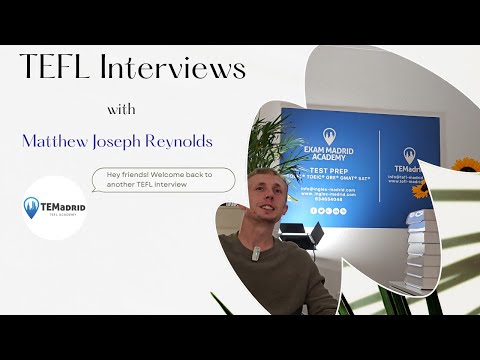
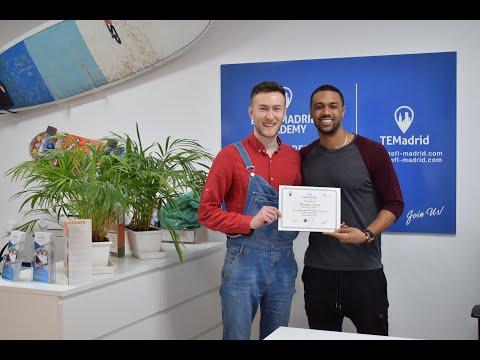
Real graduates, real journeys
Real TEFL Madrid graduates who did exactly what you're about to do — certified, placed and now teaching across Asia and beyond, including South Korea.




Would you rather teach in Spain?
Start in Madrid, teach anywhere
TEFL Madrid Academy is based in Madrid, Spain. If Europe is on your list, these are the pages that matter: the course, the visa route, the jobs and what they pay.
- TEFL Course in Spain with Visa & Paid Job4 weeks in Madrid, student visa support and a guaranteed teaching job.
- TEFL Certification in Spain for EU CitizensNo visa needed. Get certified in Madrid and start working right away.
- Teach English in MadridJobs, salaries, cost of living and visa options in the capital.
- Teach English in Spain: the complete guideRequirements, job types, visas and where the demand is.
- TEFL Jobs in SpainWhere to find them, what they pay and when schools hire.
- Level 5 TEFL Course Online168h self-paced or live 1-to-1, from anywhere.
- Teach English in Spain Without a DegreeLegal options, visas and jobs if you don't have a university degree.
Prices, dates and enrolment on the course page.

Your next chapter starts here
Teach in South Korea. Save like nowhere else.
Get TEFL-certified, land a job with free housing, paid flights and a bonus, and add up to €1,500/month in euros teaching online for our real academies. This is how a year abroad becomes real money in the bank.
4.9★ Trustpilot & Google · 2,000+ teachers trained · 15+ years