

Want to teach English in Spain? Start by looking at the jobs that interest you. Then work out what training and classroom practice you need before you apply.
A short visit to Spain tells you little about a working week. Look at where schools are, when classes run and what kind of students you would teach. Try to picture a normal day before you decide where to apply.
If you are serious about finding a job teaching English abroad, practise how you would explain a language point. For example, show when to use a verb form and give a simple example. Ask schools what qualifications and teaching skills they look for. If your move requires a visa or other permission, check the official rules for your situation before you make travel plans.
Start with a plan. Choose the learners you would like to teach and read a few job ads in the area. Then compare TEFL courses that give you a chance to practise the skills those jobs call for.
What you learn in a TEFL Course
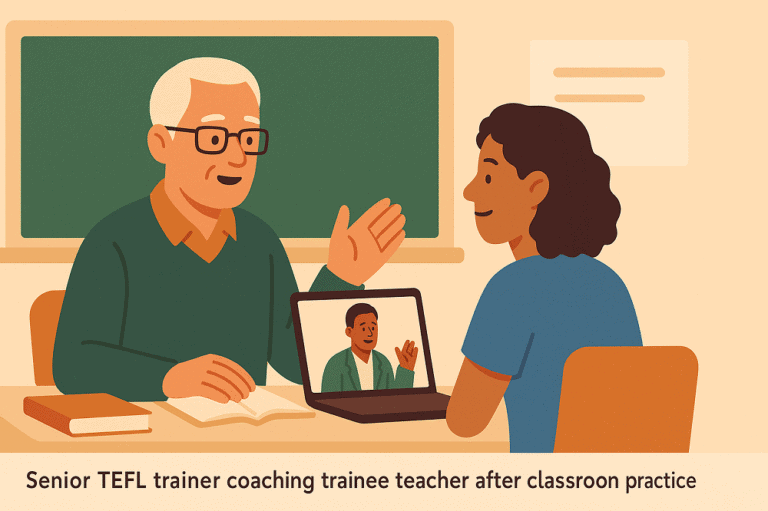
A TEFL course gives you a place to practise before you take on a class. It can feel strange to be a student again. Start by asking what you will teach during practice and how your tutor will give feedback.
One goal is to learn how to explain the English you already use.
Take a common example: “I work” and “I’m working”. Think about what each form means, then show learners when to use it. Ask them to give an example of their own. A TEFL Academy in Spain can help you practise this and other ways to make grammar clear.
- Modern Teaching Methods – How to elicit information, CCQs (Concept-Checking Questions), tips and tricks to help learners advance in the classroom
- Lesson Plans – An important step, especially when dealing with the independent needs of learners. How to incorporate activities, worksheets, games, audio/visual aids to make each class memorable and engaging
- Grammar – Breaking down grammar points for Native Speakers helps them understand the technics of teaching language to learners. It’s what the students need to learn in your classroom, and practice in the real world.
- Classroom Management – Managing your class can encourage them to continue learning under your direction. It enables students to take you seriously as an educator, and you’ll have ample opportunities to develop this skill.
- How to identify the individual needs of your students – Not every student learns the same way. Some are visual learners, some acquired their skills with music, some need to be challenged. This is critical in holding the attention of individual students in your class.
- Teaching Tools – Language learning has advanced over the years with updated method books and technology. A student in a TEFL course will also learn how to employ the various tools at their disposal to create an interactive and engaging learning environment for their students.
Plan lessons for the age and level of the group. For example, beginners may need a model before they speak. More advanced learners can use the same topic to give reasons and ask follow-up questions. During TEFL courses in Madrid, ask for feedback on your instructions and use it in your next lesson.
Your TEFL Certification and Beyond
After training, choose more than one way to look for work. Ask your course provider what career support is available. Check job sites such as Lingobongo, Tusclasesparticulares or Dave’s ESL Cafe. You can also speak to other teachers and apply to schools directly. Keep a record of the jobs you apply for and tailor your CV to each role.
Where do I get a TEFL Certificate?
TEFL Madrid Academy offers teacher training in central Madrid. Ask us how the course works, what classroom practice it includes and what support is available after training. Call or email us if you want to compare your options.