

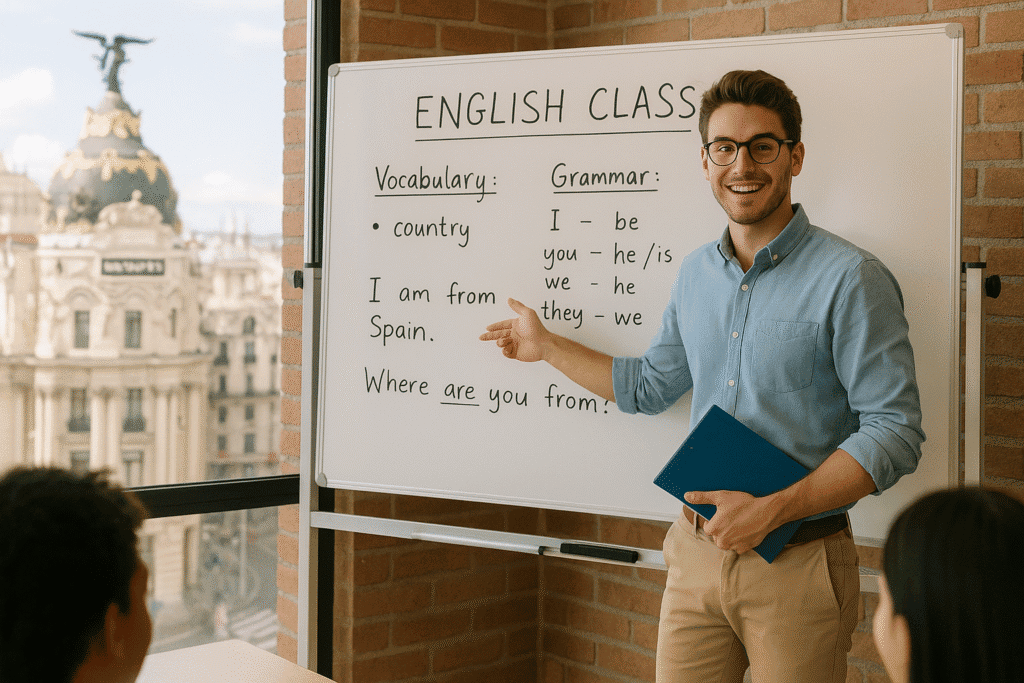
Moving to Spain to teach English is exciting but adapting to a new culture comes with surprises.
Even experienced teachers can accidentally make cultural missteps that affect their students’
engagement or their relationship with colleagues.
Understanding cultural nuances isn’t just polite it’s essential for teaching effectively in Spain.
Here are 10 common cultural mistakes English teachers make in Spain (and how to avoid them)
so you can feel confident and connected in the classroom.
1. ❌ Speaking Too Quickly
Spanish learners often struggle with fast, connected English speech. Many teachers use their natural
speaking pace, assuming students will “get used to it.”
✅ What to do instead:
• Slow down, especially with new vocabulary• Use pauses and intonation to help comprehension
• Repeat key phrases or rephrase when needed
Pro tip: Try “graded language” — simplify without sounding robotic.
2. ❌ Ignoring the Role of Tú vs. Usted
Spanish has two forms of “you” — informal (tú) and formal (usted). This distinction shapes how
students interact with you.
✅ What to do instead:
• Be aware of how students and parents address you
• Ask your director how formal your tone should be
• Adjust your expectations depending on age group
In general, students will use tú with younger teachers and usted with older or more formal ones.
3. ❌ Overestimating Punctuality

Spain has a more relaxed relationship with time. It’s not uncommon for classes to start a few
minutes late — especially in academies or private tutoring.
✅ What to do instead:
• Be on time, but stay flexible
• Don’t take lateness personally
• Build a few buffer minutes into your lesson plan
4. ❌ Expecting Silence and Stillness
Unlike in some countries, Spanish classrooms are often lively. Students may talk more, gesture
more, or seem “off task” when they’re actually engaged.
✅ What to do instead:
• Embrace the energy
• Use interactive tasks and movement
• Set clear expectations without suppressing their personality
5. ❌ Avoiding Small Talk with Colleagues
Many expat teachers stay “professional” at work — but in Spain, the staffroom is social.
Relationships matter here.
✅ What to do instead:
• Greet colleagues warmly each day
• Join coffee breaks or after-class chats
• Learn a few Spanish phrases to build rapport
Check out our guide to living in Madrid as a TEFL teacher to understand more about local lifestyle and etiquette.
6. ❌ Forgetting Local Holidays (and Strikes!)
Spain has many local and regional holidays — plus frequent teacher strikes or demonstrations.
These can disrupt schedules unexpectedly.
✅ What to do instead:
• Check regional calendars at the start of each term
• Ask colleagues or directors about planned disruptions
• Always have a flexible lesson plan in your back pocket
7. ❌ Being Too Formal with Young Learners
While professionalism matters, being overly formal with children or teens may create distance or
make learning feel boring.
✅ What to do instead:
• Smile, use humor, and be approachable
• Include games and creative tasks
• Be friendly but still establish classroom boundaries
Want to explore activities for young learners? Check out our TEFL training course — we cover
classroom management and age-appropriate lessons.
8. ❌ Assuming Everyone Understands British or American Culture

Cultural references from movies, politics, or pop culture may not resonate in Spain — especially
outside major cities.
✅ What to do instead:
• Use universal examples when teaching vocabulary or grammar
• Learn about Spanish pop culture to connect with students
• Let students share their own cultural knowledge
9. ❌ Underestimating the Importance of Family

In Spain, family is everything — and students’ home life deeply affects their schedules, attitudes,
and energy.
✅ What to do instead:
• Be understanding if a student misses class due to a family event
• Avoid scheduling private lessons too close to mealtimes or weekends
• Respect the Spanish rhythm of life (including late dinners!)
10. ❌ Not Learning Any Spanish
You don’t need to be fluent — but refusing to learn any Spanish can be seen as arrogant or distant.
✅ What to do instead:
• Learn basic greetings, classroom vocab, and cultural phrases
• Use Spanish occasionally to clarify instructions or build rapport
• Consider joining a Spanish course (great for your visa too!)
Explore our Student Visa + Spanish Course program if you’re staying long-term.
Final ThoughtsSpain is an amazing place to live and teach — as long as you’re open to adapting to its culture.
These small shifts in behavior and mindset can make a huge difference in how students respond to
you and how you enjoy your new life.
Ready to teach English in Spain with confidence?
👉 Start your TEFL journey with us in Madrid — and become the kind of teacher students love!