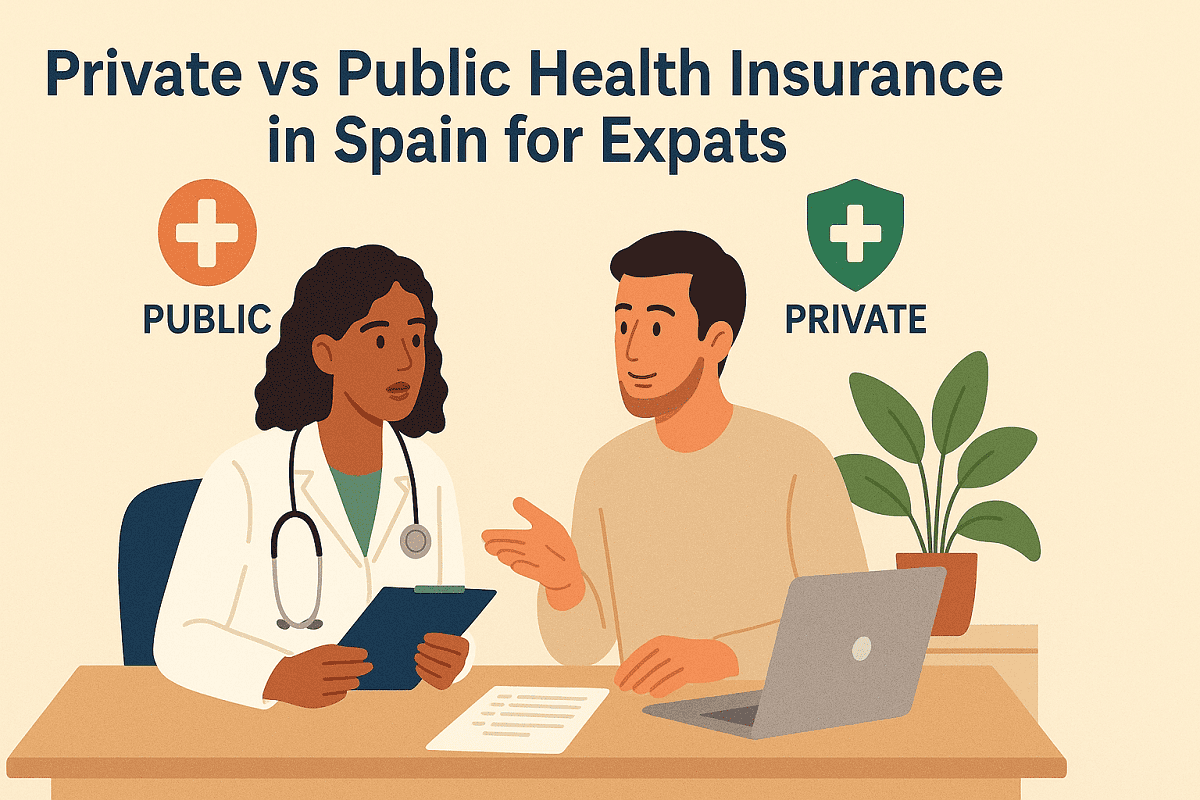

If you’re moving to Spain, one of the first questions you’ll face is how to handle your health coverage. Spain is known for its excellent public healthcare system, but as an expat — especially during your visa process — you may need private insurance first.
Understanding the differences between private and public health insurance in Spain helps you make the right decision for your budget, your lifestyle, and your visa compliance.
👉 Compare private, visa-ready options → Get a quote

The basics: Spain’s two healthcare systems
Spain has two parallel systems that can complement each other:
- Public Healthcare (SNS) – Funded by taxes and available to citizens and residents who contribute to social security.
- Private Healthcare – Paid through personal insurance or out-of-pocket, offering faster access and English-speaking services.
As an expat, the right system for you depends on your visa status and whether you’re contributing to social security.
Public Health Insurance in Spain (SNS)
Who can access it
- Spanish citizens and legal residents who pay into social security (as employees or self-employed).
- EU citizens with a European Health Card (EHIC) for temporary stays.
- Non-EU residents only after obtaining legal residence and registering in the system.
Advantages
✅ Free or low-cost medical care
✅ Nationwide hospitals and clinics
✅ Excellent quality and safety
Disadvantages
❌ Long waiting times for specialists and surgeries
❌ Fewer English-speaking doctors
❌ Not available to most expats during visa application stage

Private Health Insurance in Spain
Who needs it
- Most non-EU expats (students, digital nomads, retirees) need private insurance for visa approval.
- Even residents with access to the public system often keep a private policy for faster care and English-language service.
Advantages
✅ Immediate access to specialists and private hospitals
✅ English-speaking doctors available
✅ No waiting lists for consultations or surgeries
✅ Satisfies visa requirements for Student, Digital Nomad, and Non-Lucrative Visas
Disadvantages
❌ Monthly or annual premiums
❌ Must renew or update coverage each year
❌ Requires choosing an insurer authorized in Spain
👉 Compare private, visa-compliant policies → https://www.innoinsure.com/visainsurance/tefl
Private vs Public Health Insurance: Quick Comparison Table
Feature | Private Insurance | Public System (SNS) |
Eligibility | Anyone (expats, students, retirees) | Residents contributing to social security |
Visa Compliance | ✅ Required for most visas | ❌ Not accepted for new visa applicants |
Cost | Fixed monthly or yearly premium | Covered by taxes/social security |
Waiting Times | Short or none | Long, sometimes months |
Languages | English & multilingual | Primarily Spanish |
Choice of Doctors | Wide, flexible | Limited by region |
Availability | Immediate after purchase | After social security registration |
When to choose private insurance
You should opt for private health insurance if:
- You’re applying for a Student, Digital Nomad, or Non-Lucrative Visa.
- You’re not yet contributing to social security.
- You want faster access to care and specialists.
- You prefer English-speaking doctors and 24/7 support.
Once you become a long-term resident, you can decide whether to keep your private coverage or move into the public system.
👉 See visa-compliant private plans → Compare options

When public healthcare makes sense
The public system (SNS) is excellent once you’re fully registered as a resident and paying into social security. It’s comprehensive, affordable, and ideal for long-term living in Spain.
Many expats keep both systems:
- Use public care for emergencies or routine visits.
- Keep private coverage for fast specialist appointments, English doctors, or international travel.
Combining both systems
Thousands of expats in Spain use a hybrid model:
- Public system for general or emergency care.
- Private policy for convenience and speed.
This dual setup ensures complete protection and flexibility — especially if you need documents for renewals or prefer immediate care.
Common expat scenarios
1️⃣ Digital Nomad or Freelancer
Needs private insurance for visa + quick access to care.
2️⃣ Student in Spain
Must present private, full-coverage insurance (no copays) for the Student Visa.
3️⃣ Retiree or Non-Lucrative Visa Holder
Requires one-year private insurance paid in advance.
4️⃣ Long-term Resident
Can register for the public system and optionally maintain private insurance.
FAQs
Can I switch from private to public insurance later?
Yes. Once you’re registered with Spanish social security, you can access the public system and decide whether to keep your private coverage.
Does private insurance count for my visa renewal?
Yes — as long as the policy remains active, visa-compliant, and without copays.
Can I use both systems at the same time?
Absolutely. Many expats combine both for maximum flexibility.
Do I need private insurance if I’m employed in Spain?
Not necessarily. If your employer registers you with social security, you’ll be covered under the public system — though some people still prefer private for speed.

Conclusion
Both public and private healthcare systems in Spain offer outstanding medical services, but each fits a different stage of your expat journey.
For visa approval, private health insurance is mandatory. Once you’re legally resident, you can benefit from Spain’s excellent public system — or keep both for peace of mind.
👉 Compare visa-compliant private health plans here → https://www.innoinsure.com/visainsurance/tefl